
Travertine vs Concrete Pavers for Your Pool Deck
· By Ricardo Pessoa
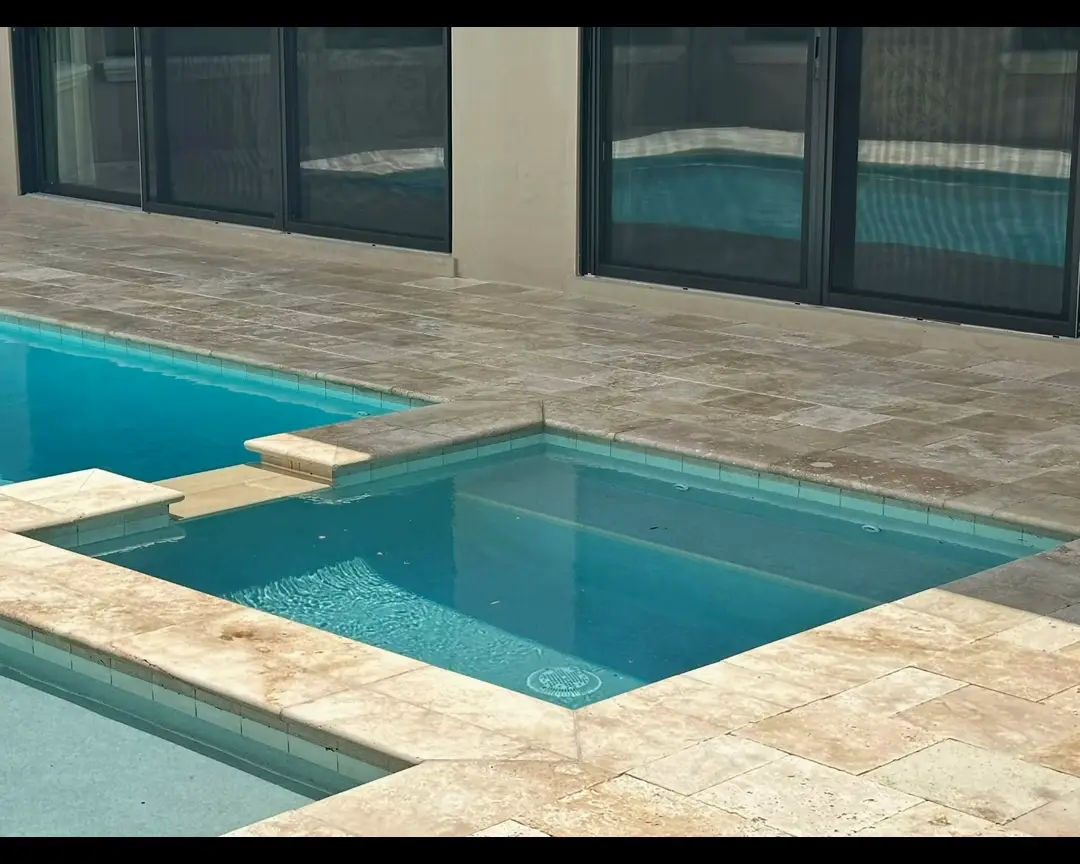
In Central Florida, the pool deck gets used almost year-round. It has to handle bare feet on a 95 degree afternoon, splashing water, pool chemicals, sudden storms and the occasional pool party. When homeowners in Orlando, Clermont and Davenport plan new pool deck pavers, the decision usually comes down to two materials: natural travertine pavers or manufactured concrete pavers.
Both make great pool decks when installed correctly, but they feel, look and age differently. Here is how they compare on the points that matter most in our climate.
What is the difference?
Travertine is a natural limestone formed around mineral springs. It is quarried, cut into pavers and finished, most often with a tumbled or brushed surface for pool areas. Its natural pores and soft, light tones (ivory, walnut, silver and blended colors) give it a resort feel that has made it extremely popular on Florida pool decks.
Concrete pavers are manufactured from cement, aggregate and pigment in molds. Brands commonly found in Central Florida offer a wide range of shapes, colors and textures, including styles made to imitate stone. Because they are manufactured, they are consistent in size and thickness and generally cost less than natural stone.
Heat: why travertine is so popular around Florida pools
Comfort under bare feet is the biggest reason Florida homeowners choose travertine. Its light color reflects sunlight and its porous structure helps it release heat, so it typically stays noticeably cooler than many concrete pavers in the same sun.
Concrete pavers can still work well around a pool, especially in lighter colors. Darker grays, reds and charcoal blends absorb more heat and can get uncomfortably hot by mid afternoon. If you lean toward concrete, choosing a light shade makes a real difference. Pools inside a screen enclosure get some relief from the screen, but the deck still bakes in direct sun.
Slip resistance and safety
Wet decks are where slips happen, so texture matters. Tumbled travertine has a naturally textured surface that gives decent grip when wet. Polished travertine, on the other hand, is not appropriate for pool areas.
Concrete pavers usually have a textured, slip-resistant surface straight from the factory. With either material, be careful with sealer choice. A high-gloss sealer can make a pool deck slick, so most pool decks are sealed with a matte or low-sheen product, sometimes with an anti-slip additive.
Cost: what most Central Florida homeowners can expect
Based on ranges that Orlando area contractors publish, installed concrete pavers commonly run around $12 to $22 per square foot, while travertine is often quoted around $18 to $30 per square foot. For a full pool deck, most homeowners see totals somewhere between $6,000 and $18,000, with travertine and larger decks toward the top of that range or beyond.
Other factors move the price as much as the material: removing an old deck, matching or replacing coping, working around drains and equipment, access through a screen enclosure, and the layout pattern. Treat these numbers as general market figures. An on-site estimate is the only way to know your actual cost.
Durability and long-term maintenance
Concrete pavers are dense and very durable. They handle foot traffic, furniture and the occasional dropped item well, and replacement units are easy to source while a product line is in production. Over many years, their color can fade with UV, which sealing helps slow.
Travertine is durable outdoors too, but as a natural stone it needs a little more attention. Its pores can trap dirt and grow algae or mold in humid, shady spots, and acidic cleaners can etch it. Many homeowners seal travertine with a product made for natural stone to make cleaning easier and help it resist stains. Salt water pools deserve a specific conversation, since salt can be harder on natural stone over time, and sealing becomes more important.
Both materials are installed over a compacted base, and in our sandy soil that base is what keeps the deck flat. A sinking or uneven pool deck is almost always a base or drainage issue rather than a material issue.
Look, style and resale
Travertine delivers a natural, upscale look that buyers and vacation renters in Kissimmee and Davenport often associate with high-end pools. Every piece varies slightly in tone and texture, which is part of its appeal.
Coping is another detail worth planning. Many travertine decks use matching bullnose travertine coping for a seamless edge, while concrete paver decks often use a bullnose paver or keep the existing coping. Matching the coping to the deck makes the whole pool area look intentional instead of patched together, and it is a good moment to fix any loose or cracked coping stones.
Concrete pavers offer more design flexibility. You can choose patterns, borders and color blends that match a driveway or patio, and the uniform look suits modern homes. Some homeowners combine the two, using travertine on the deck and concrete pavers for surrounding walkways to manage cost.
How to choose
Choose travertine if barefoot comfort, a natural stone look and a premium finish are your top priorities, and you are comfortable with periodic sealing. Choose concrete pavers if you want a lower upfront cost, more color and pattern choices, and a very consistent surface, ideally in a lighter shade to manage heat.
Seeing samples in your own backyard light helps more than any photo. Looks Good Pavers & Outdoors installs pool deck pavers, including travertine, across Orlando, Kissimmee, Clermont, Winter Garden and Davenport. Call or text (321) 287-5043 for a free estimate and to talk through which material fits your pool.
Frequently asked questions
- Is travertine really cooler than concrete pavers?
- Generally yes. Light-colored travertine typically stays cooler underfoot than most concrete pavers, especially darker ones. A light-colored concrete paver narrows the difference.
- Does travertine have to be sealed?
- It is not strictly required, but many Florida homeowners seal travertine pool decks with a natural stone sealer to help resist stains, algae and salt, and to make cleaning easier.
- Can travertine be used with a salt water pool?
- Yes, many salt pools have travertine decks. Salt can be harder on natural stone over time, so choosing a quality, dense travertine and keeping it sealed is important.
- Can pavers go over my existing pool deck?
- In some cases pavers or thin travertine can be installed over a sound existing concrete deck, which avoids demolition. It depends on the deck condition, height at doors and coping, and drainage, so it should be evaluated on site.
Related services
Serving
Found this helpful? Make us a preferred source on Google.
Ready for an exact price?
Get a free, no-pressure in-home estimate. Real numbers for your home, not a phone guess.