
Pool Deck Resurfacing vs New Pavers: What Florida Homeowners Should Know
· By Ricardo Pessoa
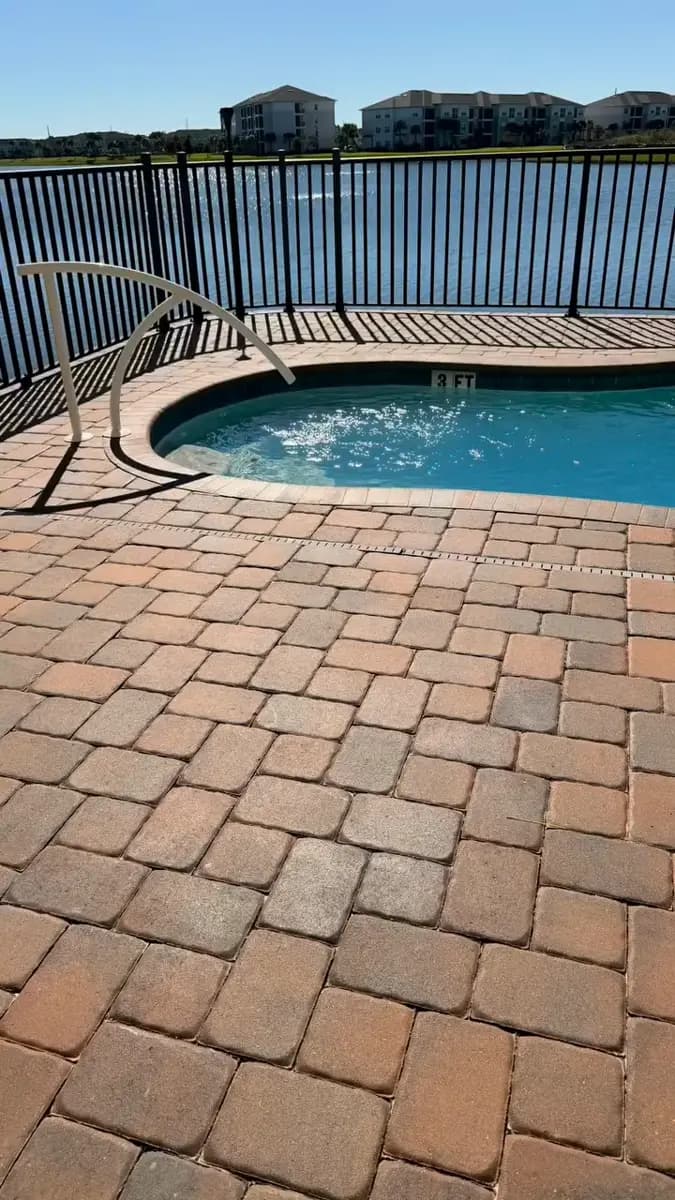
Many Central Florida pools were built with a poured concrete deck finished with a spray texture or acrylic coating. After years of sun, rain and chlorine, those decks start to show it: hairline cracks, peeling coating, faded color, mildew and spots that get hot enough to make you run to the water. At that point most homeowners search for pool deck resurfacing and quickly run into a second option, replacing or overlaying the deck with pavers.
Both can make an old deck look new again. The right choice depends on the condition of the concrete underneath, your budget, and how long you plan to stay. Here is an honest comparison to help you decide.
What pool deck resurfacing actually means
Resurfacing keeps the existing concrete slab and puts a new finish on top. Common methods include acrylic or spray knockdown coatings (the textured finish found on many Florida decks), stamped or decorative overlays, and paint-type coatings. The old surface is cleaned, cracks are patched, and the new coating is applied and sealed.
The appeal is cost and speed. Resurfacing typically costs less than new pavers and can often be finished in a few days. The limitation is that it is a cosmetic layer. It does not fix the slab underneath, so if the concrete is moving or cracking structurally, those cracks tend to show back up through the new coating.
What going with new pavers involves
There are two main ways to switch to pavers. The first is a full replacement: the old concrete is removed, the base is rebuilt and compacted, and new pavers are installed. The second is an overlay, where thinner pavers or travertine are set over the existing deck when the slab is still structurally sound and there is room for the added height at doors, coping and drains.
Either way, you get a surface made of individual units instead of a coating. Popular choices around Orlando pools include concrete pavers in light colors and travertine, which many homeowners choose because it stays cooler underfoot.
Cost comparison
Resurfacing is usually the budget option. Coating systems are typically priced well below pavers per square foot, which is why they are popular for a quick refresh before selling a home or for decks in good structural shape.
New pavers cost more. Based on ranges local contractors publish, most Central Florida pool deck paver projects fall somewhere between $6,000 and $18,000, depending on size, demolition, and whether you choose concrete pavers or travertine. Overlaying a sound slab can reduce the cost by avoiding removal. When comparing, think about the cost per year of use, not only the first invoice. A coating that needs to be redone several times over the life of a paver deck can narrow the gap.
Lifespan, cracking and repairs
Coatings wear. In Florida sun and pool chemicals, many resurfaced decks need recoating or touch-ups after several years, and peeling or flaking can start where water sits or where the slab moves. If the slab underneath settles in our sandy soil, a coating cannot bridge that movement for long.
Pavers handle movement better because the joints allow small shifts without cracking. If a section sinks or a pool plumbing line needs to be reached, the pavers can be lifted, the base corrected and the same units reset. That repairability is one of the biggest long-term advantages, and it is also why sunken or loose pool deck pavers are usually a fixable problem rather than a reason to tear out the whole deck.
Heat, comfort and safety around the pool
Resurfacing coatings can be specified in lighter colors with a textured, slip-resistant finish, and many are designed to stay relatively cool. As they age and wear smooth, grip can decrease.
With pavers, comfort depends on the material and color. Light travertine is widely considered one of the coolest options for bare feet, and light concrete pavers also perform well. Most pool decks are sealed with a matte or low-sheen sealer to protect the surface without making it slippery.
When each option makes sense
Resurfacing is a reasonable choice when the concrete slab is solid with only minor surface cracks, the budget is tight, or you want a quick update before listing a home. It is also useful when the deck is under a screen enclosure where removal would be complicated.
New pavers make more sense when the slab has structural cracks, uneven or sinking sections, or drainage problems, when the coating has failed more than once, or when you plan to stay in the home for years and want a deck that ages well. If you already have pavers that are sunken, stained or loose, repair, cleaning and sealing may bring them back without replacing anything.
Get an honest assessment of your deck
The deciding factor is usually what is happening under the surface, and that is hard to judge from a photo. A walkthrough can show whether cracks are cosmetic or structural, whether the deck drains properly, and whether an overlay is possible at your doors and coping.
Before you get quotes, it helps to note a few things: where water puddles after a storm, which cracks have grown over the last year, whether any section feels hollow or uneven, and how high the deck sits at the sliding doors. Also check your HOA guidelines, since some communities in the Orlando area review color and material changes even for backyard projects. Having that information ready makes any estimate more accurate.
Looks Good Pavers & Outdoors installs and repairs pool deck pavers across Orlando, Kissimmee, Clermont, Winter Garden and Davenport, with a focus on quality and durability over the lowest price. Call or text (321) 287-5043 for a free estimate.
Frequently asked questions
- Is resurfacing cheaper than pavers for a pool deck?
- In most cases, yes. Resurfacing with a coating or overlay typically costs less upfront than new pavers. Pavers usually last longer and are easier to repair, which can make them the better value over time.
- Can pavers be installed over my existing pool deck?
- Often, if the slab is structurally sound and there is enough clearance at doors, coping and drains. Thinner pavers or travertine are used for overlays. A deck with structural cracks or settling usually needs removal first.
- How long does a pool deck project take?
- Resurfacing is often done in a few days. A paver overlay or full replacement typically takes about a week or more, depending on deck size, demolition and weather.
- My pool deck pavers are sinking. Do I need a new deck?
- Usually not. Sunken pavers can typically be lifted, the base corrected and the pavers reset, followed by cleaning and sealing. Replacement is only needed when the damage is widespread.
Related services
Serving
Found this helpful? Make us a preferred source on Google.
Ready for an exact price?
Get a free, no-pressure in-home estimate. Real numbers for your home, not a phone guess.