
Pavers in Orlando, FL: A Homeowner's Guide to Driveways, Patios and Pool Decks
· By Ricardo Pessoa
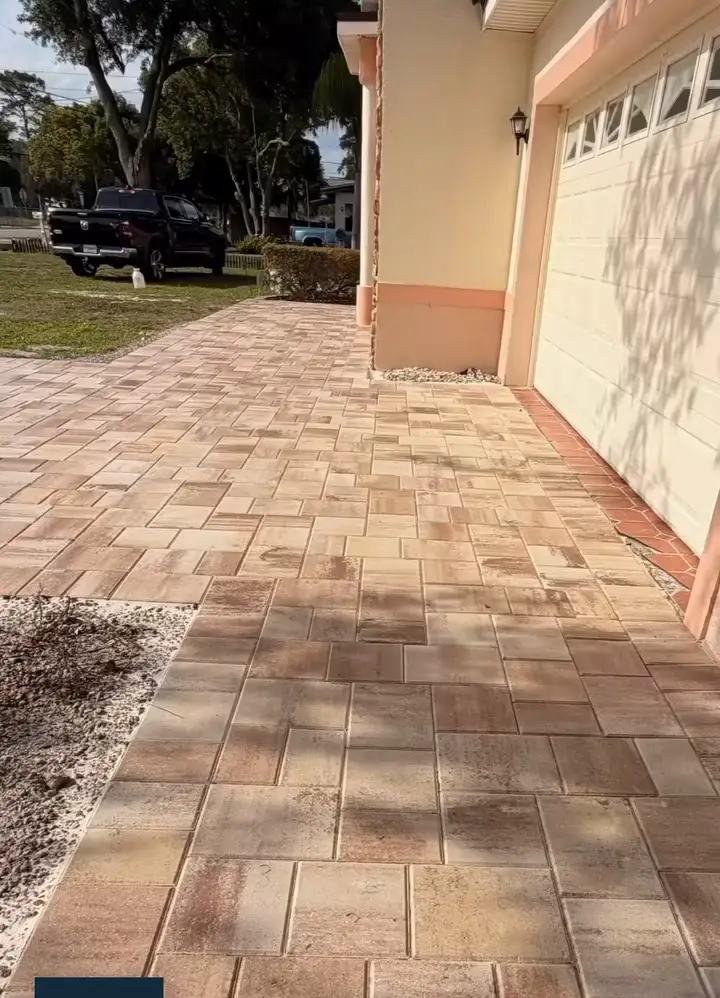
Walk through almost any Orlando neighborhood and you will see pavers everywhere: on driveways in Dr. Phillips, around pools in MetroWest, on front walks in College Park and across the backyards of new homes in Lake Nona. They are popular here for good reasons. Pavers handle heat, flex instead of cracking, and can be lifted and reset if something underneath shifts.
That said, a paver project in Orlando is not the same as one in Atlanta or Phoenix. Our soil, our rain and the way our communities are governed all change how a good job gets built. This guide covers what matters locally so you can plan with confidence, ask better questions and spot a solid installation when you see one.
Why pavers make sense in Orlando's climate
Orlando sees long, hot summers and an afternoon thunderstorm pattern that runs roughly from late May into September. Poured concrete tends to develop cracks as the ground underneath settles and the slab expands and contracts with the heat. Interlocking pavers are individual units separated by joints, so small movements are absorbed by the system instead of showing up as a long crack across your driveway.
Pavers also stay serviceable. If a tree root or a utility repair disturbs one area, the affected pavers can be pulled up, the base corrected and the same pavers put back. With a slab, the same repair usually leaves a patch that never quite matches.
Heat is the other factor. Light colored concrete pavers and travertine stay noticeably more comfortable underfoot than dark surfaces, which is why so many Orlando pool decks use them. If your project is around a pool or in full afternoon sun, color choice is a comfort decision, not just a style one.
Orlando soil and drainage: the part you never see
Much of Orange County sits on sandy soil that drains fast in some spots and holds water in others, especially in lower lots near the many lakes around the city. A paver surface is only as good as what it sits on. A proper installation removes organic topsoil, builds a compacted base (crushed concrete or limerock is common in Central Florida) and sets the pavers on a thin, level bedding layer.
Slope is just as important. Water should move away from your house and off the paved area, not toward the garage or into a lanai. During a summer downpour, a driveway with the wrong pitch can send water straight to the front door. Ask any contractor how they plan to direct runoff, where it will go, and whether the finished grade ties in with your existing yard and gutters.
Edge restraint is the last piece. Without a solid border holding the field of pavers in place, the edges slowly spread and the joints open up. On Orlando's sandy ground, that edge detail is one of the clearest signs of a careful job.
How Orlando neighborhoods tend to use pavers
Every part of the city has its own personality, and it shows in how people design hardscape. In College Park and the older streets near downtown, homeowners often lean toward red or tumbled brick looks that fit the bungalows and the historic brick streets nearby. A brick paver walkway with a contrasting border can make an older home feel finished without fighting its character.
In Dr. Phillips, Bay Hill and the lakefront homes around the Butler Chain, larger pool decks and wide driveways are common, and travertine shows up a lot for its cool surface and upscale look. MetroWest and Hunters Creek have plenty of homes with screened lanais where homeowners want to extend the patio past the enclosure for a grill area or fire pit.
Lake Nona and the newer communities in southeast Orlando are a different story. Many homes there were built with plain concrete driveways and small slabs out back, so the most common projects are driveway conversions and backyard patios that turn a builder grade yard into usable space.
HOAs, permits and approvals
A large share of Orlando homes sit inside a homeowners association. Most HOAs require you to submit an architectural review request before changing a driveway, adding a patio or expanding a pool deck, and many restrict colors, patterns or how far a driveway can widen. Getting that approval in writing before work starts saves a lot of frustration.
Permitting depends on where you live. Some addresses with Orlando mailing addresses are inside City of Orlando limits, while others fall under unincorporated Orange County, and the two have their own rules. Work that touches the driveway apron or the public right of way, or that changes drainage, is the kind that is most likely to need review. A reputable contractor will check the requirements for your specific address rather than assume.
It also helps to call 811 before any digging so underground utilities are marked. A professional crew handles this as part of the job, but it is worth confirming.
What drives the cost of a paver project in Orlando
Across the Orlando market, installed paver projects are often quoted somewhere in the range of roughly $12 to $22 per square foot for standard concrete pavers, with travertine and porcelain typically higher. These are broad market figures, not a quote, and your number can land outside that range.
The biggest swings come from site prep. Removing an existing concrete driveway, hauling debris and correcting a poor base all add labor before a single paver goes down. Pattern matters too: a simple running bond installs faster than a herringbone or a multi color design with borders. Access, curves, steps and the size of the area round out the picture.
Long term, plan for maintenance. Periodic pressure washing, re sanding the joints and sealing help pavers resist weeds, ants and fading from the Florida sun. Sealing is optional, but many Orlando homeowners consider it worthwhile, especially on pool decks and light colored driveways.
Choosing a paver contractor in Orlando
Start by confirming the contractor is licensed and insured, and ask to see photos of finished work that looks like your project. A detailed written estimate should spell out excavation depth, base material, compaction, edge restraint, pattern, joint sand and cleanup.
Ask how they handle drainage and HOA paperwork, and who to call if a section settles later. Clear, specific answers usually signal a crew that builds for the long run.
Looks Good Pavers & Outdoors is based in Orlando and installs driveways, pool decks, patios, walkways, fire pit areas and retaining walls, along with paver repair, pressure washing and sealing. We are licensed and insured, and estimates are free. Call or text (321) 287-5043 to talk through your project.
Frequently asked questions
- Are pavers better than concrete for an Orlando driveway?
- For many homeowners, yes. Pavers flex with small ground movement instead of cracking, and damaged sections can be lifted and reset. Concrete usually costs less up front, so the right choice depends on budget, look and how long you plan to stay in the home.
- Do I need HOA approval for pavers in Orlando?
- If your home is in an HOA, most likely. Many Orlando associations require an architectural review for driveways, patios and pool deck changes, and some limit colors and patterns. Get written approval before work begins.
- How long does a paver driveway installation take?
- A typical residential driveway often takes a few days once materials arrive, including removal of the old surface, base prep and installation. Larger projects, complex patterns and summer rain delays can stretch the schedule.
- Should I seal my pavers in Orlando?
- Sealing is optional, but it helps pavers resist stains, fading and weed growth in the joints, which matters in Orlando's sun and rain. Many homeowners reseal every few years, especially on pool decks.
Serving
Found this helpful? Make us a preferred source on Google.
Ready for an exact price?
Get a free, no-pressure in-home estimate. Real numbers for your home, not a phone guess.