
Paver Patio Ideas for Florida Backyards: Fire Pits, Seat Walls and More
· By Ricardo Pessoa
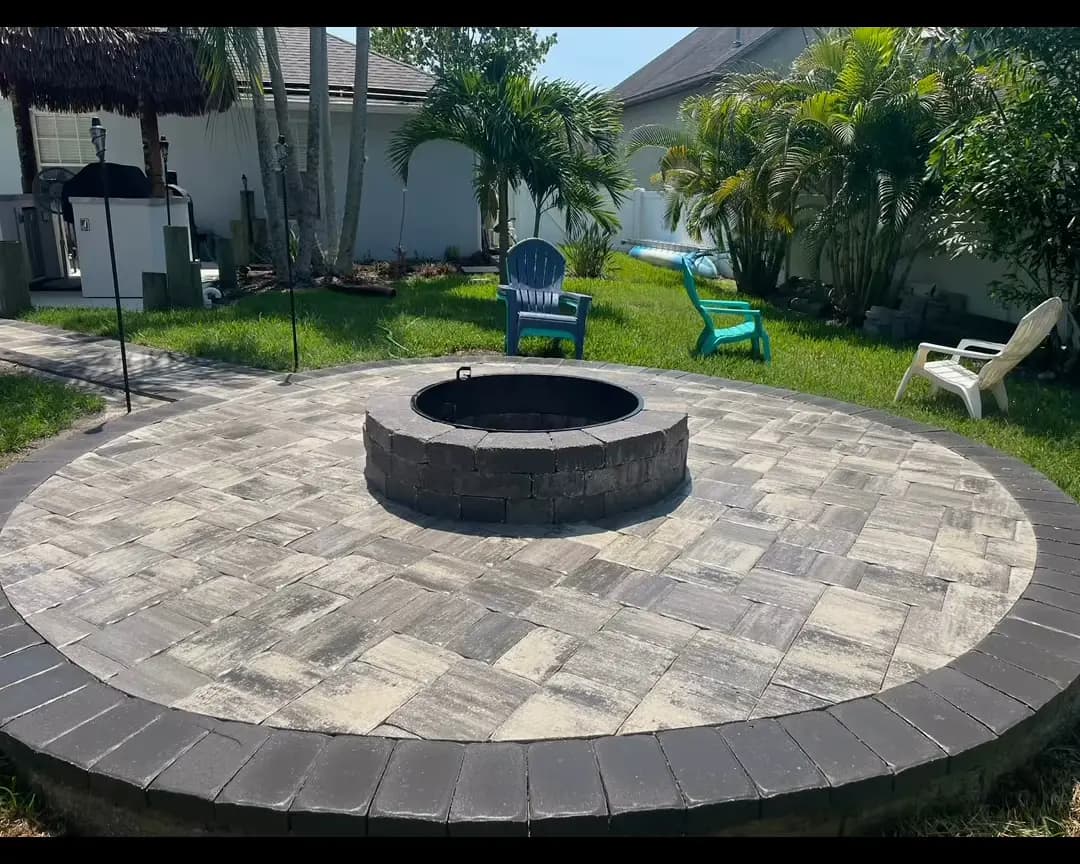
A paver patio is one of the best ways to turn a flat Central Florida backyard into a space you actually use. Pavers handle our heat better than a solid slab, they do not crack when the sandy soil shifts a little, and if something ever settles, individual stones can be lifted and reset. They also come in enough shapes and colors to match almost any home.
The trick is designing for how we live here. That means planning for intense sun, sudden afternoon downpours, screen enclosures, pool areas and HOA rules. Below are paver patio ideas that look good and make sense in Orlando, Clermont, Winter Garden and the rest of the region.
Extend the lanai into a bigger outdoor living area
Many Florida homes come with a small concrete lanai under the roofline. One of the most popular patio ideas is to extend it outward with pavers, creating a larger area for a dining table, lounge chairs or an outdoor kitchen. Pavers can be laid over the existing slab in some cases or the slab can be removed so everything sits on a properly built base.
If you have a screen enclosure or plan to add one, think about the layout early. Footings for the enclosure need to line up with the paver area, and the base around them should be compacted well so the border does not sink. A patio inside a screen enclosure also stays cleaner, with fewer leaves and less debris in the joints.
Build a fire pit area for cooler evenings
From late October through March, Central Florida evenings are perfect for sitting around a fire. A round or square fire pit area set into the patio becomes a natural gathering spot. Circular paver patterns, often called circle kits, radiate out from the fire pit and look great from above, while a simple square layout can feel more modern.
Plan for clearances. Keep the fire pit well away from the house, screen enclosures, overhanging trees and anything that can catch an ember. Check your HOA rules and any local burn regulations before building, since some neighborhoods have restrictions on wood burning fire pits and prefer gas units.
Leave enough room around the pit for chairs to pull back comfortably. A good rule of thumb is a few feet of walking space behind each seat so people can move around without stepping off the pavers.
Add seat walls and retaining walls
Seat walls are low walls built from wall block that wrap around a patio or fire pit, usually at a comfortable sitting height. They give you built in seating for a crowd without crowding the space with furniture, and they define the edge of the patio in a clean, finished way.
Retaining walls do more structural work. Even in mostly flat parts of Central Florida, many lots in Clermont and the rolling areas around it have real grade changes. A retaining wall can create a level patio on a sloped yard, hold back soil next to a pool deck, or build a raised planter. Proper drainage behind the wall is essential, because heavy summer rain saturates the soil and that water pressure is what pushes poorly built walls out of line.
Combining the two is common: a retaining wall to level the yard and a seat wall on top or along the patio edge. Using matching or complementary block and pavers ties it all together.
Choose colors and materials that stay cool
Florida sun is intense, and dark pavers in full sun can get uncomfortably hot under bare feet. Lighter colors such as creams, tans, light grays and blends reflect more heat, which matters for patios that connect to a pool. Travertine is a favorite for pool areas because it tends to stay cooler and has a natural stone look.
Porcelain pavers are another option that has grown in popularity for patios, especially inside screen enclosures, thanks to their clean modern look and resistance to staining. Traditional concrete pavers remain the most versatile choice for budget and style range.
Mixing a border color with a main field color, or adding a herringbone or basket weave pattern, adds a lot of character without much extra cost. Sealing helps protect the color from UV fading over time.
Connect it with walkways and landscape borders
A patio feels much more complete when a paver walkway connects it to the driveway, side gate or pool. Walkways also keep people off the lawn during rainy season, when grass turns muddy fast. Curved walkways tend to feel more relaxed and natural, while straight lines suit modern homes.
Small touches like paver tree rings and landscape borders can repeat the patio material elsewhere in the yard and make the whole space look planned rather than pieced together.
Plan drainage, HOA approval and budget up front
Every good paver patio idea depends on drainage. The patio should slope slightly away from the house and pool so summer storms run off instead of pooling. Downspouts and sprinkler heads should not dump water directly onto the edge, and the base should be built in compacted layers on our sandy soil so it does not settle.
If you live in an HOA, submit your design, colors and wall details for architectural review before work begins. Many boards meet monthly, so build that into your timeline.
As for budget, installed paver patios in the region often fall in a broad market range of roughly 12 to 22 dollars per square foot for concrete pavers, with fire pits, seat walls, retaining walls, travertine and complex patterns adding to the total. Those are general figures only. Looks Good Pavers & Outdoors provides free estimates for paver patios, fire pit areas, retaining walls and walkways across Orlando, Kissimmee, Clermont, Winter Garden and Davenport. Call or text (321) 287-5043 to talk through your ideas.
Frequently asked questions
- Are pavers better than concrete for a Florida patio?
- For many homeowners, yes. Pavers flex with the sandy soil instead of cracking, individual stones can be repaired, and there are far more design options. Concrete usually costs less up front, but cracks are hard to fix without a visible patch.
- Can I put a fire pit on a paver patio?
- Yes, fire pits are one of the most popular patio features. Keep it well away from the house, trees and screen enclosures, use a proper fire pit insert or block designed for heat, and check HOA and local rules before building.
- What is the difference between a seat wall and a retaining wall?
- A seat wall is a low, freestanding wall built mainly for seating and defining space. A retaining wall holds back soil where there is a change in grade, so it needs a stronger base and drainage behind it to handle water pressure after heavy rain.
- Which paver colors stay coolest in the Florida sun?
- Lighter colors such as cream, tan and light gray generally stay cooler than dark pavers. Travertine is also popular around pools because it tends to feel cooler underfoot.
Related services
Serving
Found this helpful? Make us a preferred source on Google.
Ready for an exact price?
Get a free, no-pressure in-home estimate. Real numbers for your home, not a phone guess.